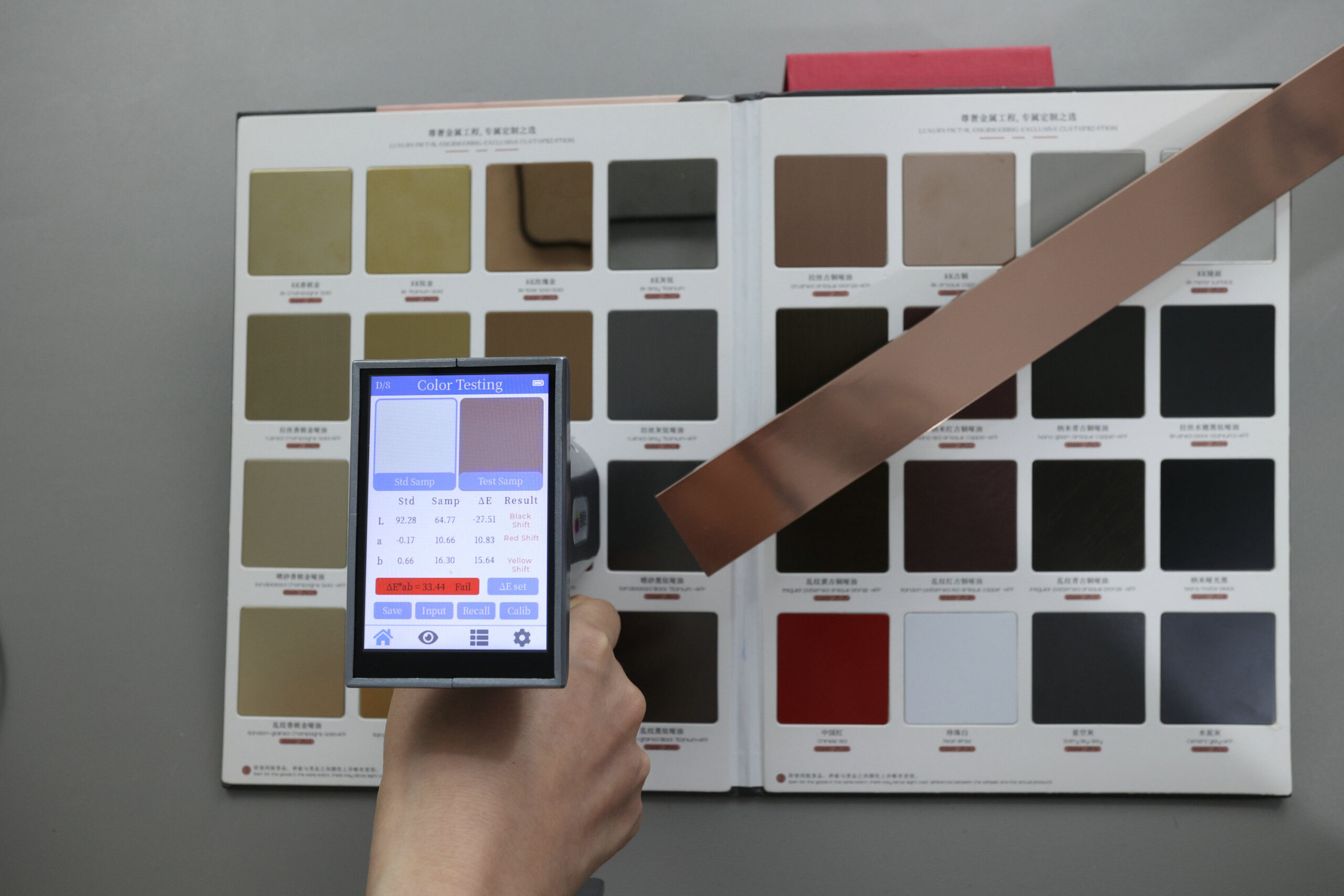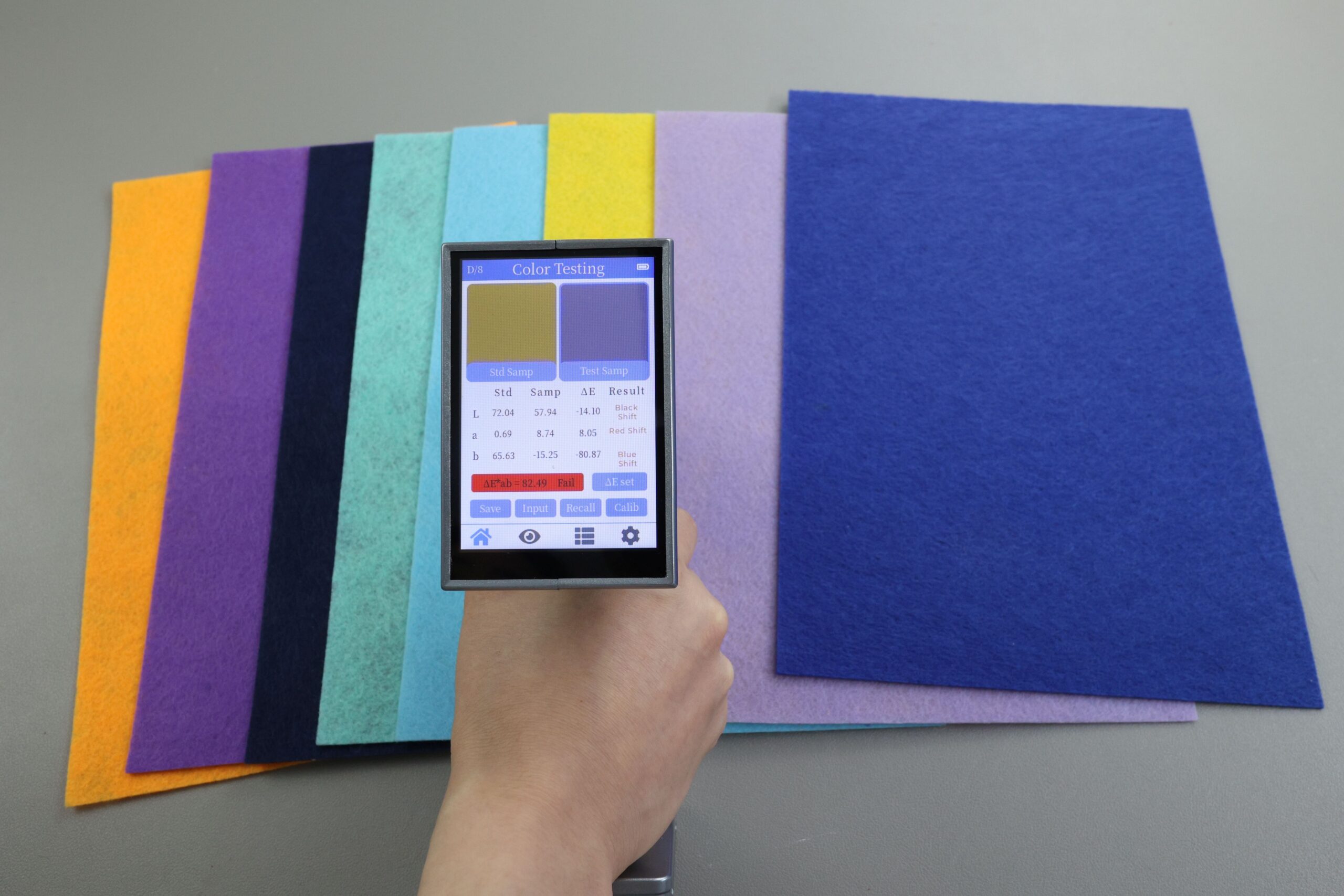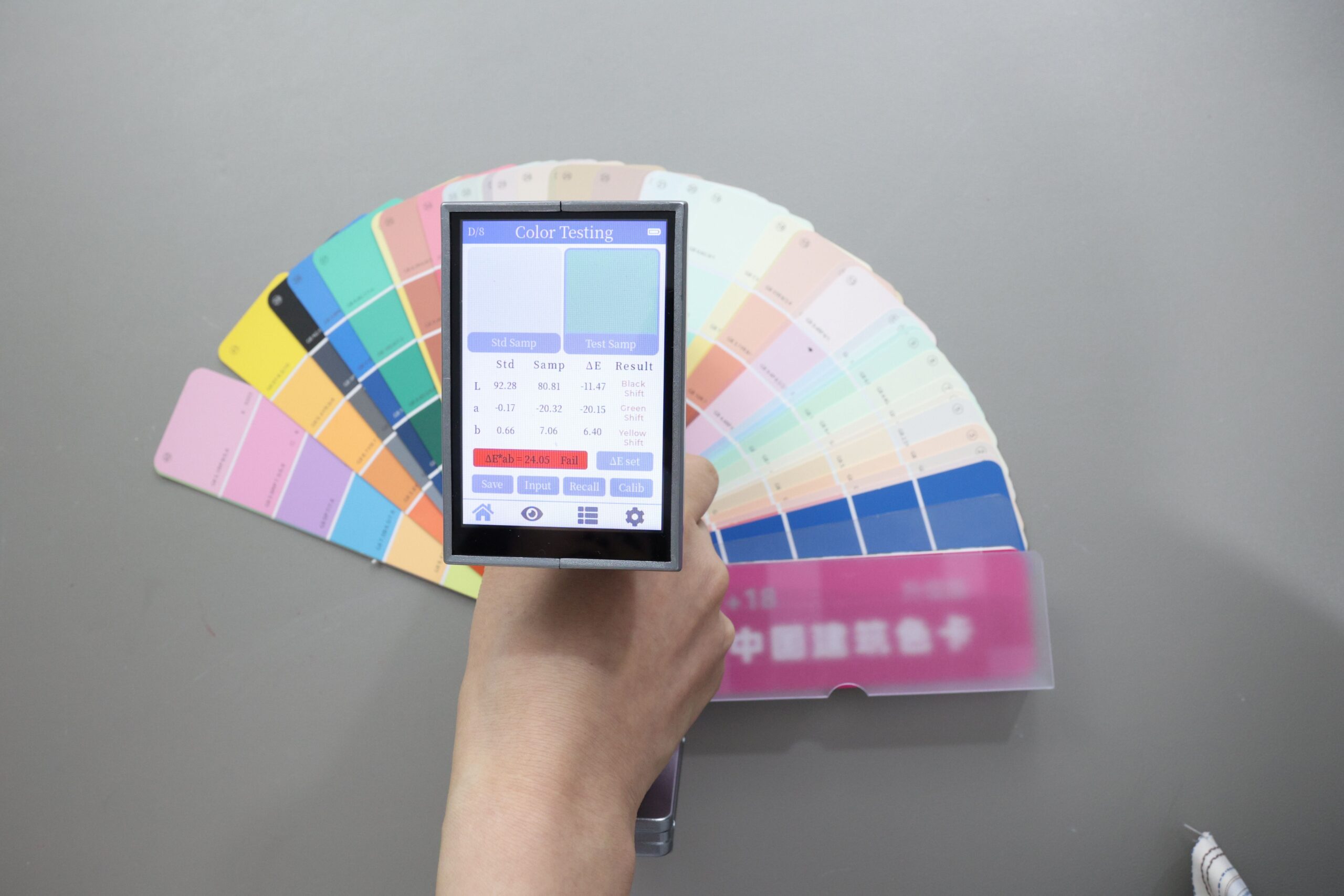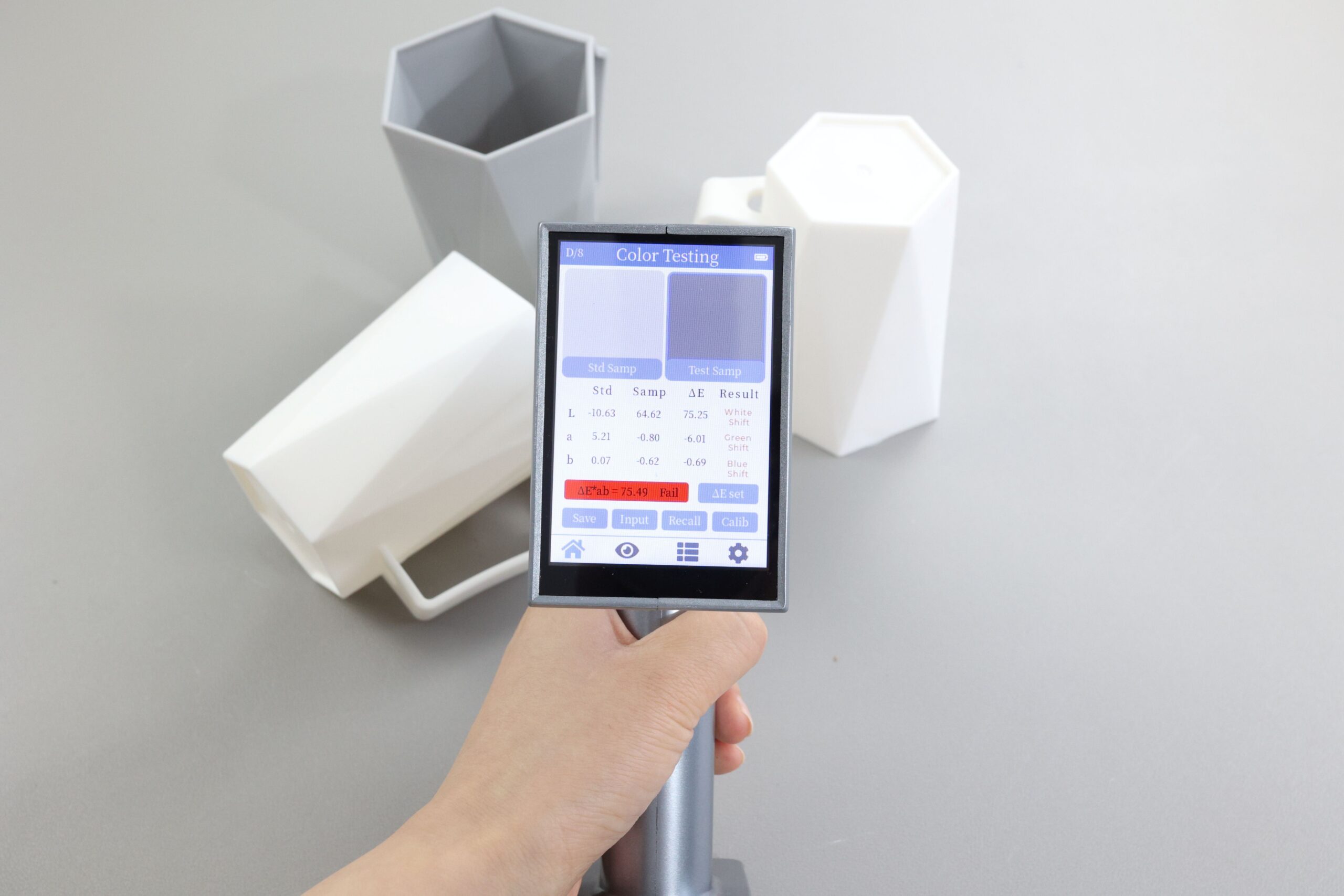
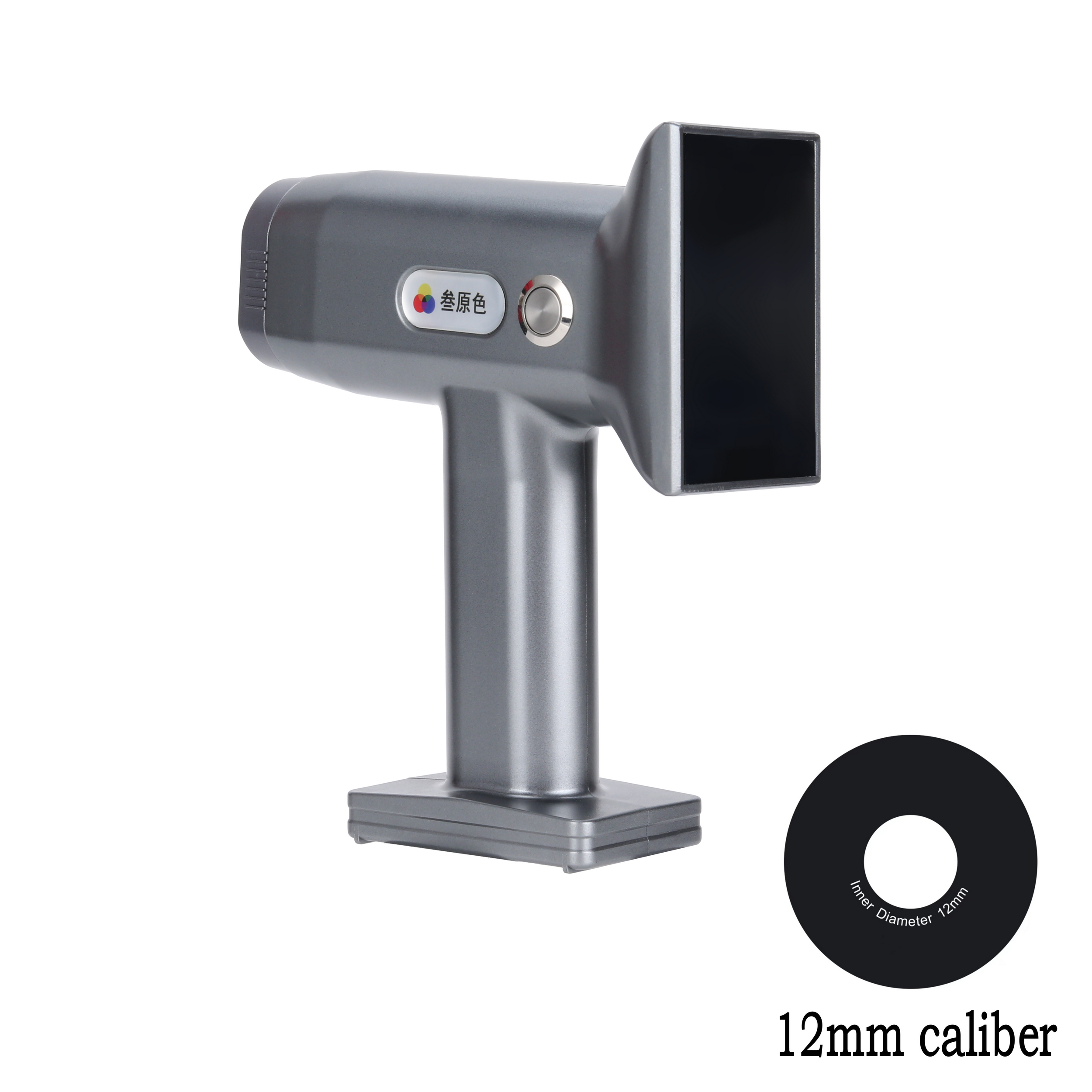
The Sanyuanse Color Difference Meter is a professional instrument designed for color comparison, distinct from a spectrophotometer. Equipped with a 12mm measuring aperture, it accommodates large-area, flat, and curved samples, making it suitable for color inspection across a wide range of products, including paints and coatings, plastics, printed paper goods, textiles, leather and sheet materials, ceramics and building materials, furniture and woodwork, and chemical masterbatches.
I. Measurement Characteristics
It detects only the *relative* color difference between a sample and a standard reference, outputting deviation values for ΔL, Δa, Δb, and ΔE to provide an intuitive assessment of the magnitude and direction of color shifts; it does *not* measure absolute Lab color values.
Its primary applications focus on color formulation and matching, production color difference control, and batch-to-batch color consistency testing.
II. Explanation of Lab Color Difference and Matching
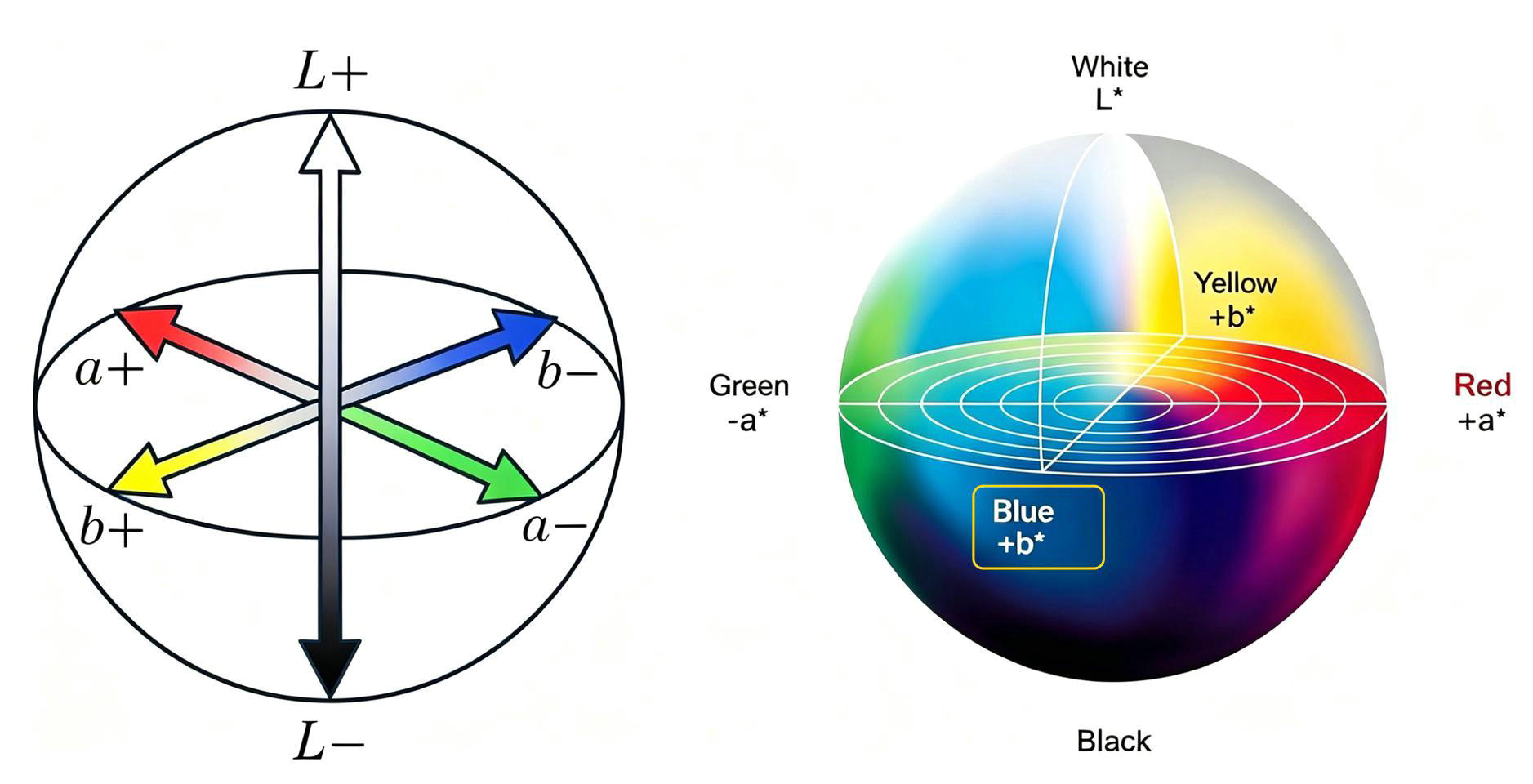
L (Lightness): ΔL+ indicates the sample is too light (needs darkening); ΔL− indicates the sample is too dark (needs brightening).
a (Red-Green Axis): Δa+ indicates the sample is too red; Δa− indicates the sample is too green.
b (Yellow-Blue Axis): Δb+ indicates the sample is too yellow; Δb− indicates the sample is too blue.
Total Color Difference (ΔE): The smaller the value, the closer the colors are; in most industries, a ΔE value of less than 1 is typically considered acceptable.
III. Differences from Spectrophotometers
Color Difference Meter: Outputs relative color differences; offers fast measurement speeds and high cost-effectiveness; ideal for daily factory color matching, batch quality inspection, and general industry comparisons.
Spectrophotometer: Capable of measuring absolute color values, creating color databases, and performing spectral analysis; primarily used in R&D, high-precision color matching, and the establishment of color standards.
In summary: A color difference meter assesses the magnitude and direction of color deviations, whereas a spectrophotometer defines the color itself.
IV. Support for Multiple Color Spaces
It can simultaneously display color values across multiple spaces—including Lab, RGB, XYZ, LCh, Yxy, and LUV—thereby meeting the specific inspection standards required by diverse industries such as printing, lighting, display technology, and chemicals.
V. Color Matching Example
Standard Sample: L=80, a=5, b=10; Measured Sample: L=82, a=3, b=13.
Color Difference Analysis: The sample is too light, too green, and too yellow. Adjustment Strategy: To achieve a color match that meets the standard, one must decrease the lightness (L), increase the red component (a), and decrease the yellow component (b).