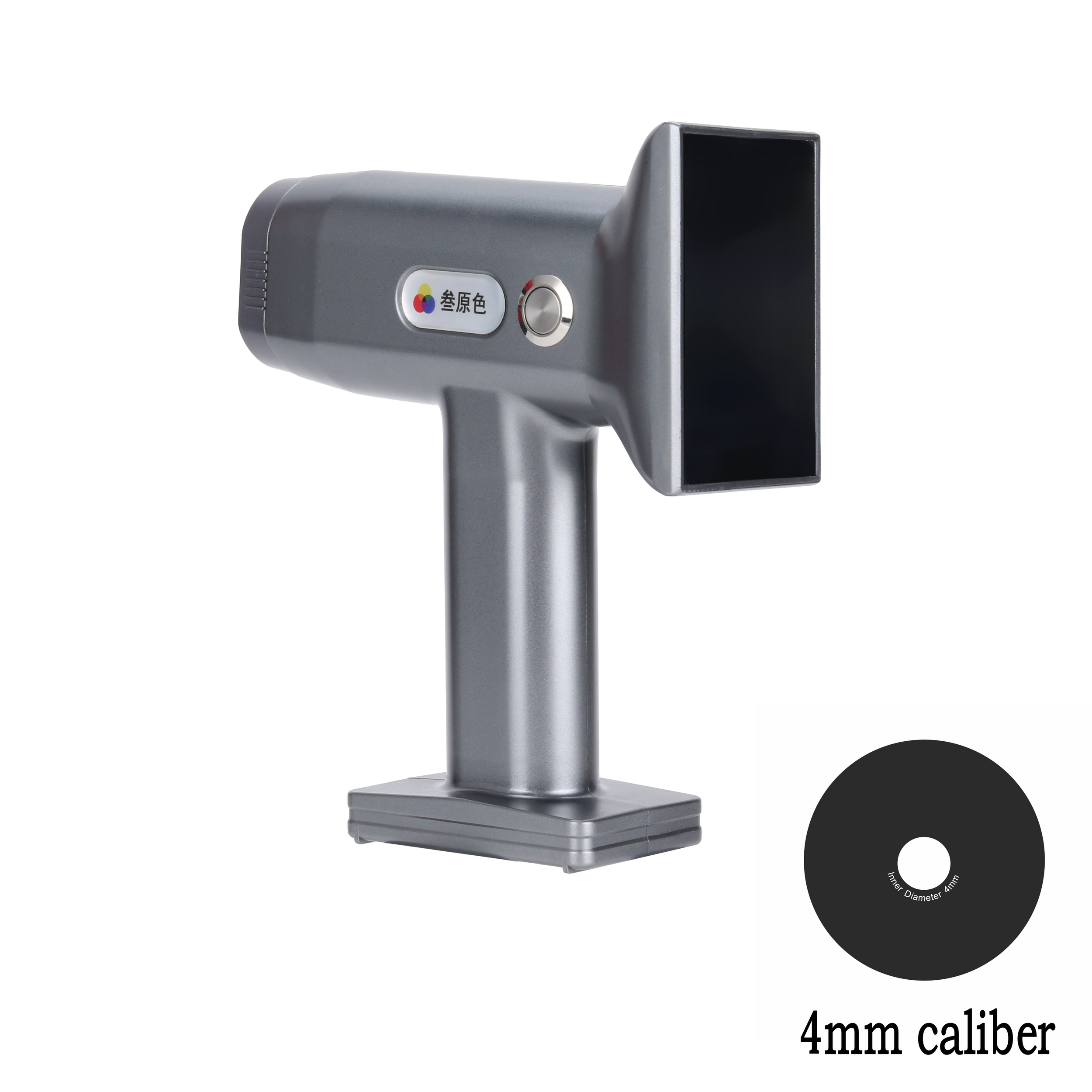
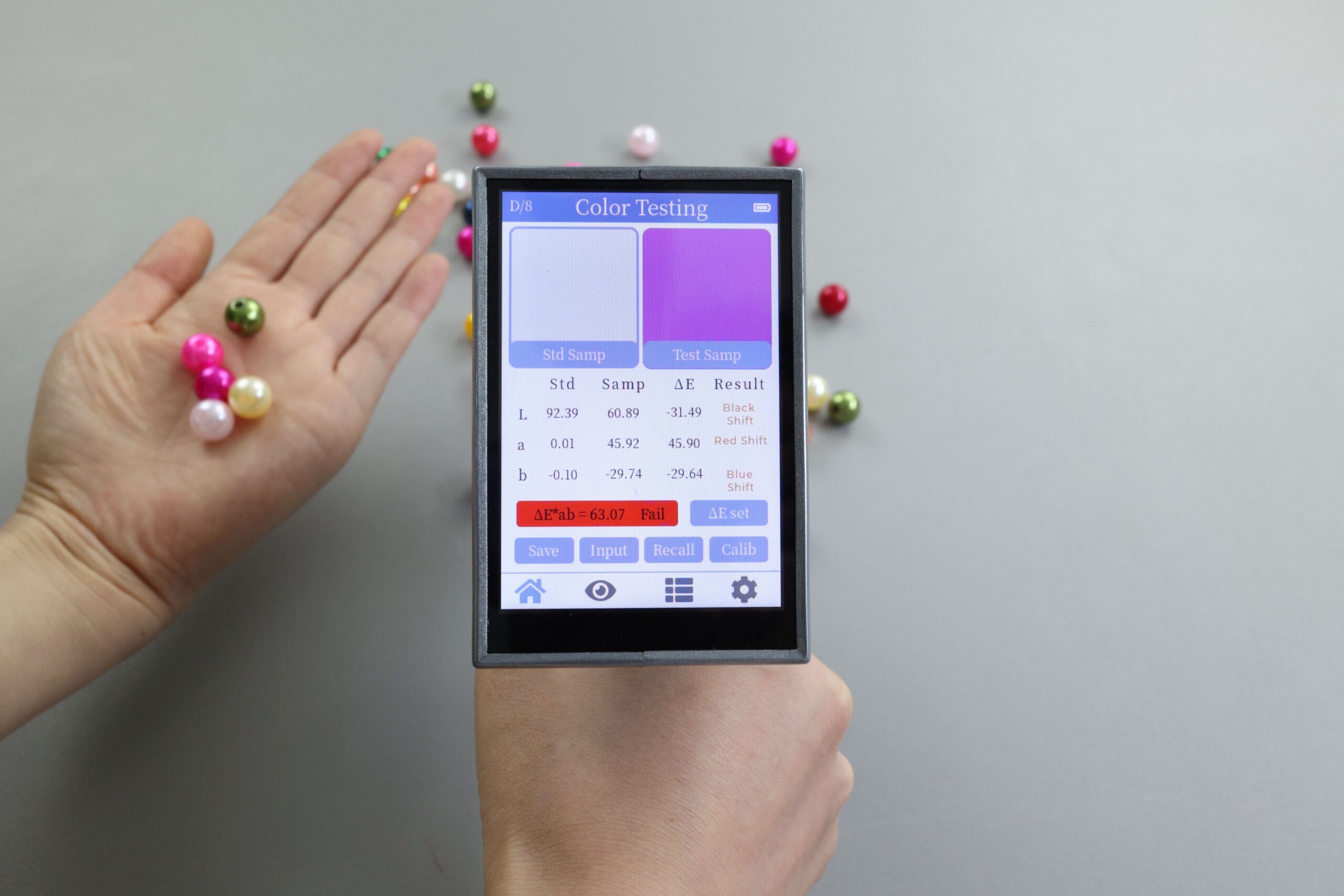
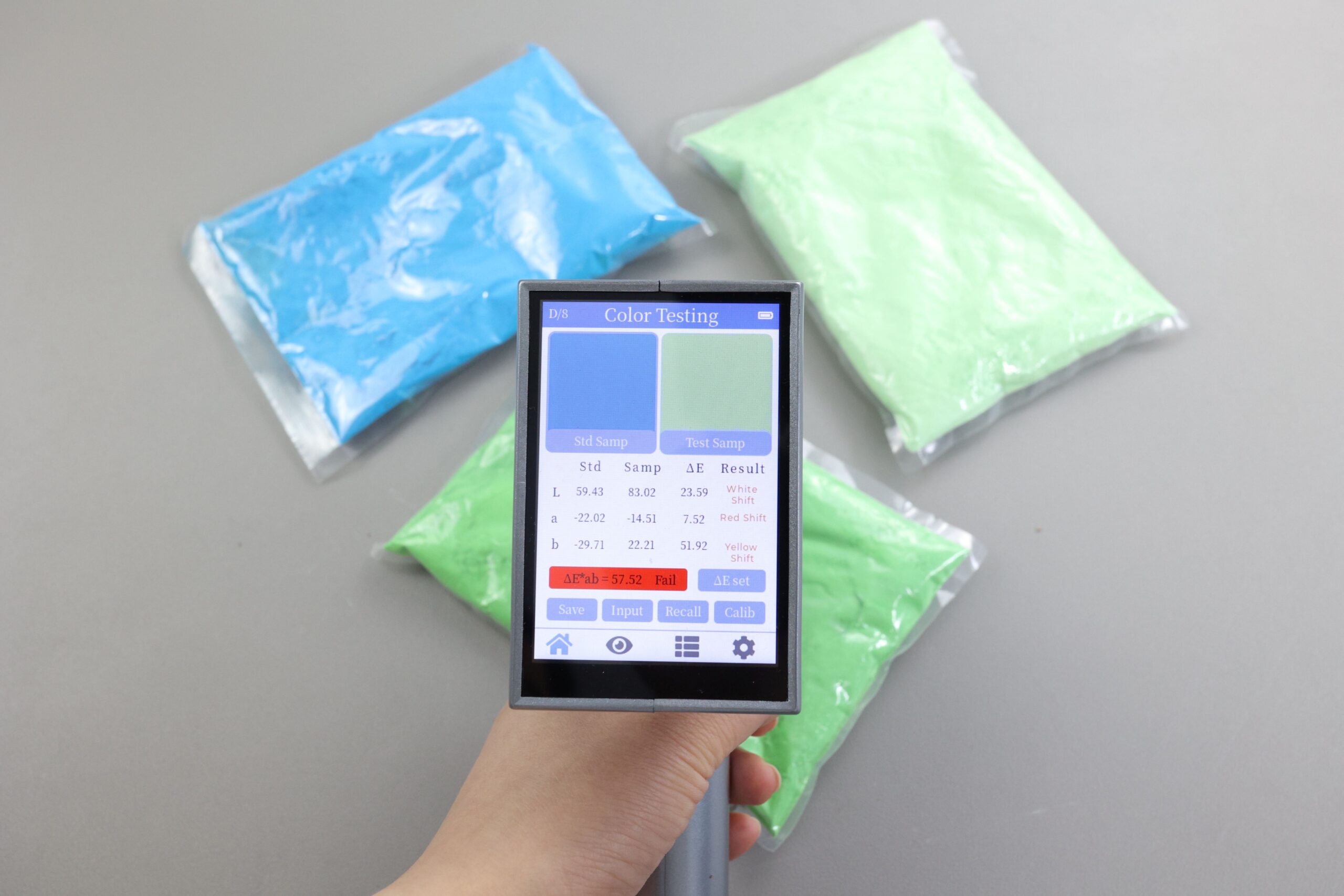
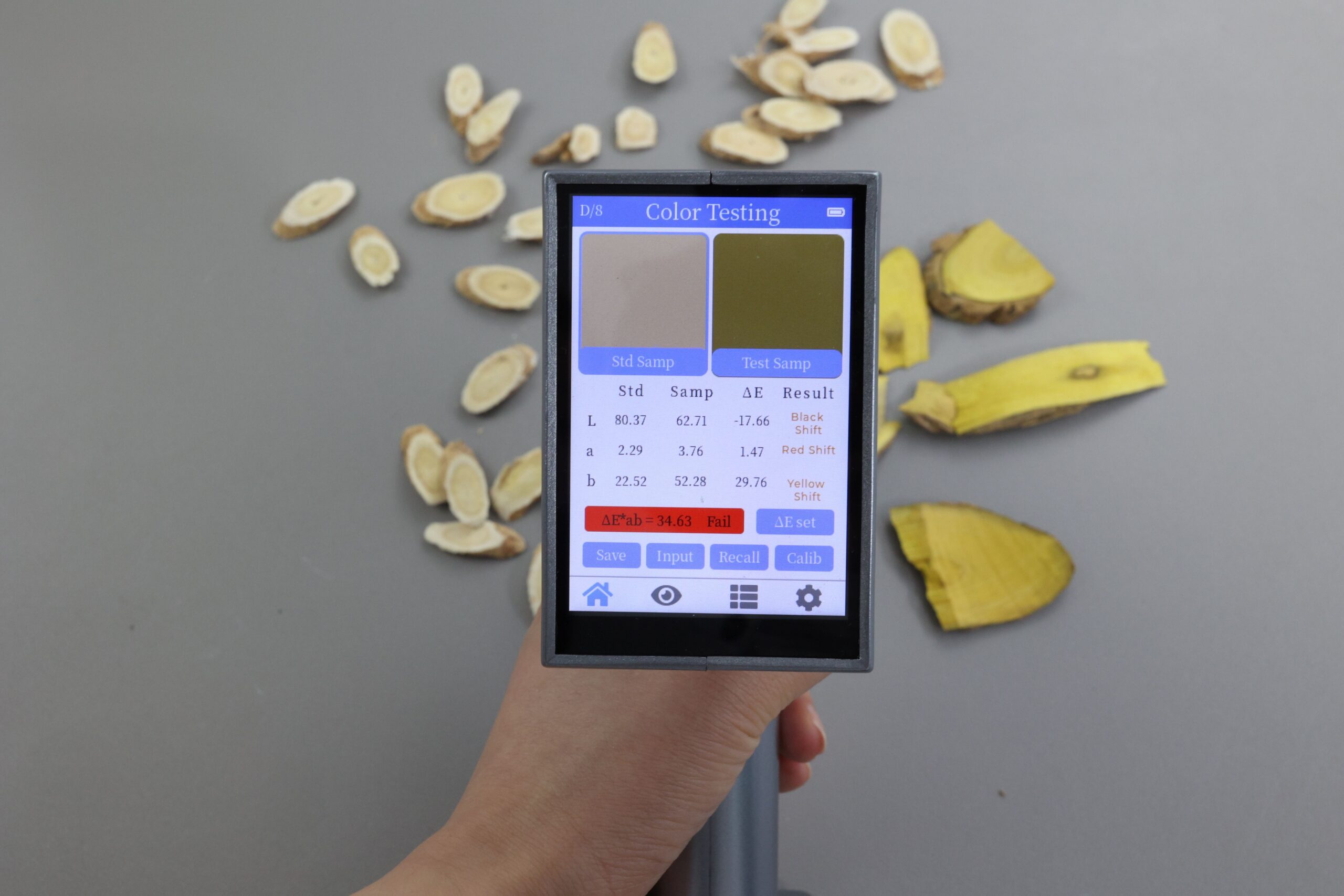
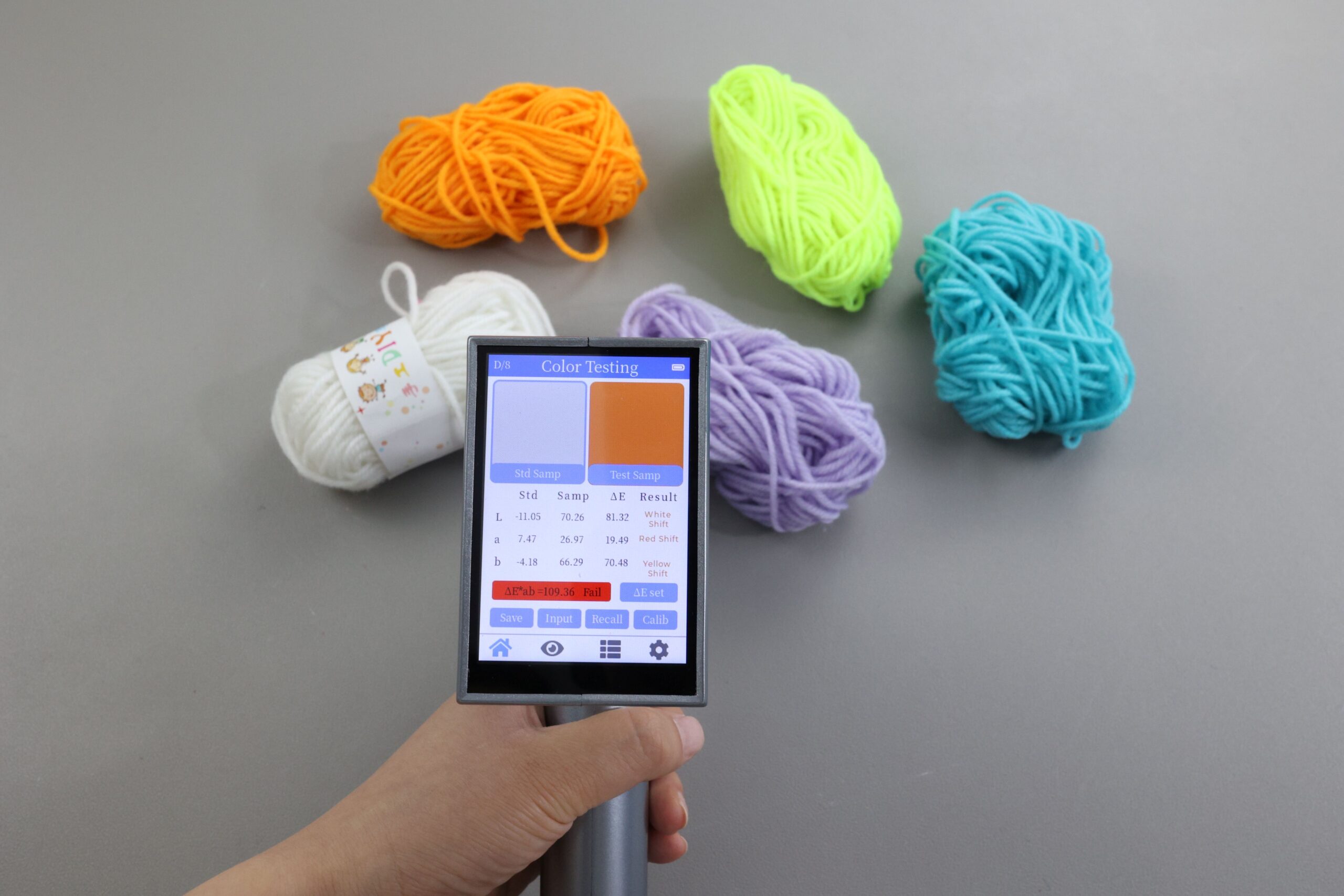

This instrument comes standard with a 4mm measuring aperture, specifically designed for the color measurement of small-area and small-spherical products. It accurately measures chromaticity parameters such as Lab, RGB, XYZ, LCh, Yxy, and LUV, and automatically calculates color difference values; during color matching, users can directly utilize the measured data to quickly formulate color-mixing recipes.
The Sanyuanse Color Difference Meter is a professional instrument designed specifically for color difference comparison, distinct from a spectrophotometer. Equipped with a 4mm measuring aperture, it is suitable for analyzing small-area, flat, or curved samples, as well as small-particle products. It is ideal for color inspection of precision electronic components, small plastic parts, fine textiles, miniature hardware, small ceramic pieces, and fine printed materials—as well as small-particle color masterbatches, pigments, plastic granules, fine powders (colorants), small buttons, miniature accessories, and similar products or materials.
This device detects only the *relative* color difference between a sample and a standard reference; it outputs ΔL, Δa, Δb, and ΔE deviation values, allowing for an intuitive assessment of the magnitude and direction of any color shift. It does *not* measure absolute Lab color values.
– L (Lightness): ΔL+ indicates the sample is too bright (needs darkening); ΔL− indicates it is too dark (needs brightening).
– a (Red-Green Axis): Δa+ indicates a shift toward red; Δa− indicates a shift toward green.
– b (Yellow-Blue Axis): Δb+ indicates a shift toward yellow; Δb− indicates a shift toward blue.
– Total Color Difference (ΔE): The lower the value, the closer the color match; industry standards typically consider a ΔE < 1 to be acceptable.
– Color Difference Meter: Outputs *relative* color differences; offers rapid measurement speeds and high cost-effectiveness, making it suitable for daily factory color adjustments and batch quality inspections—particularly for the rapid testing of small-particle materials and precision miniature parts.
– Spectrophotometer: Capable of measuring *absolute* color values and establishing color libraries; typically utilized in R&D, high-end color matching, and the establishment of color standards.
In summary: A color difference meter assesses the magnitude and direction of color *deviations*, whereas a spectrophotometer defines the color *itself*.
The device can simultaneously display color values across multiple spaces—including Lab, RGB, XYZ, LCh, Yxy, and LUV—thereby meeting the specific inspection standards required across diverse industries such as small-particle materials, precision electronics, and printing.
Standard Sample: L=80, a=5, b=10; Measured Sample: L=82, a=3, b=13
Color Difference: Lighter, greener, and yellower; Adjustment Strategy: Decrease lightness, increase redness, and decrease yellowness to meet the target specifications (Suitable for color matching various sample types, such as small-granule masterbatches and small plastic parts).