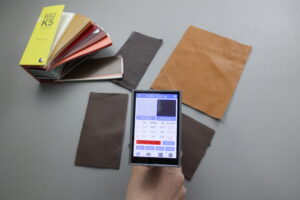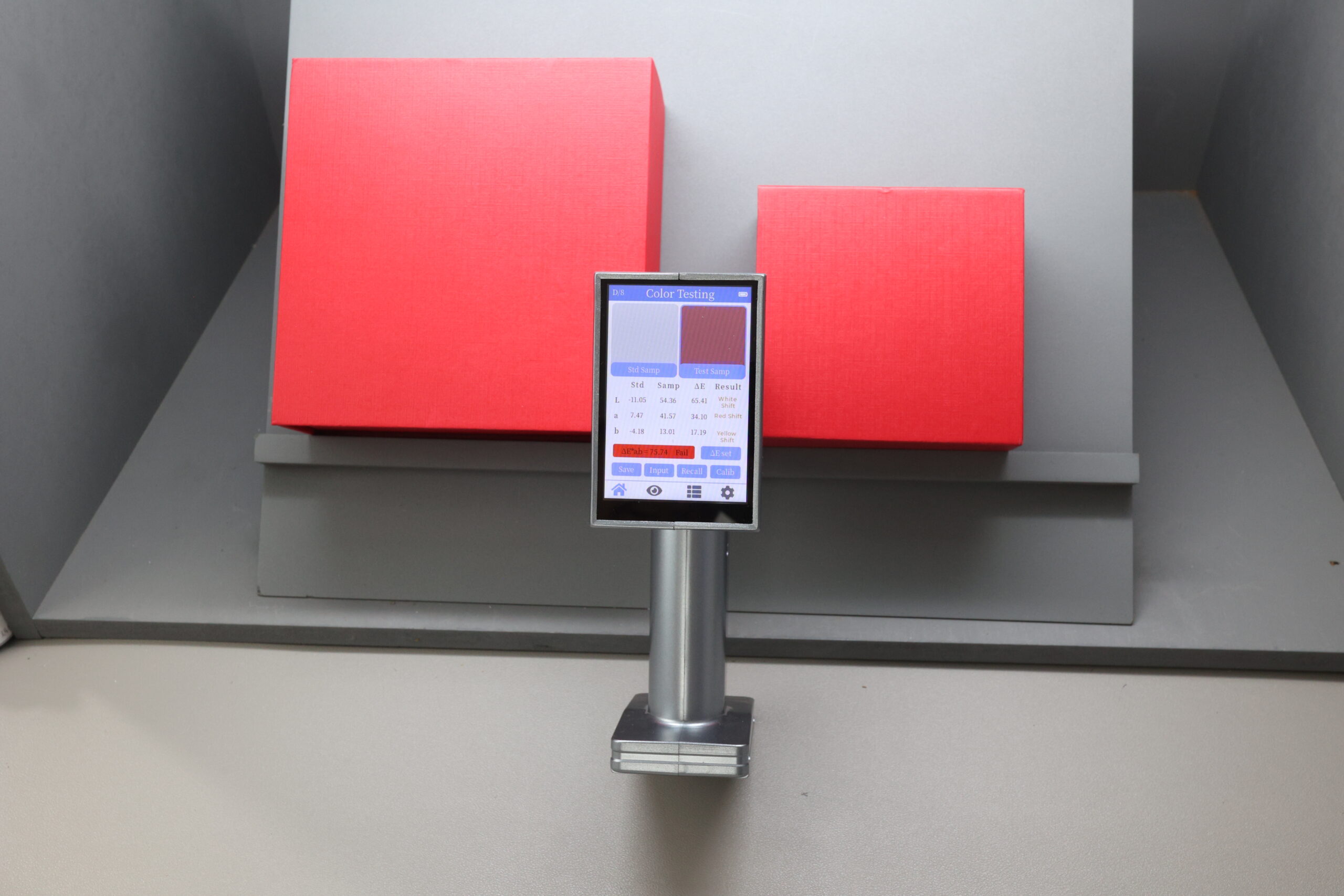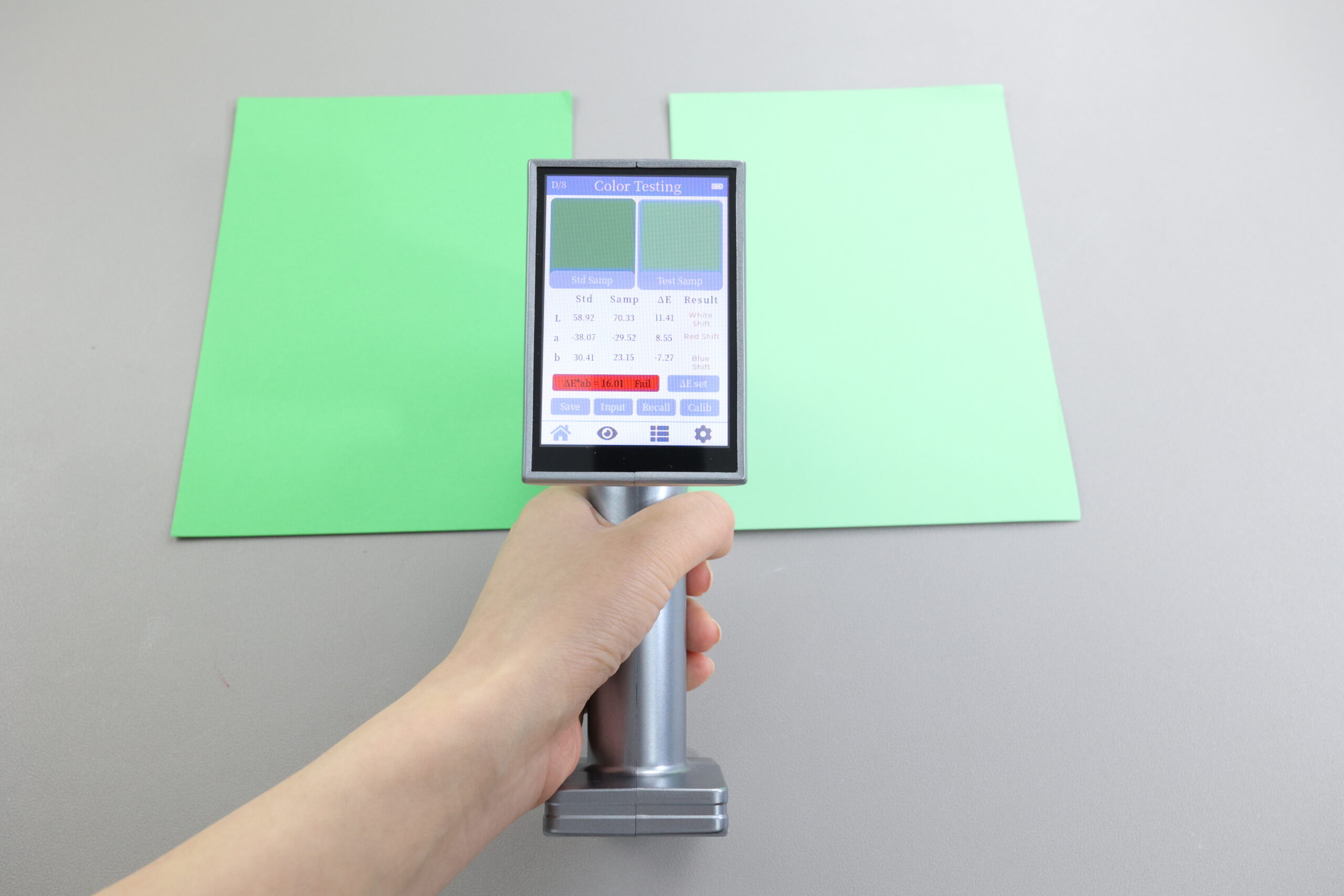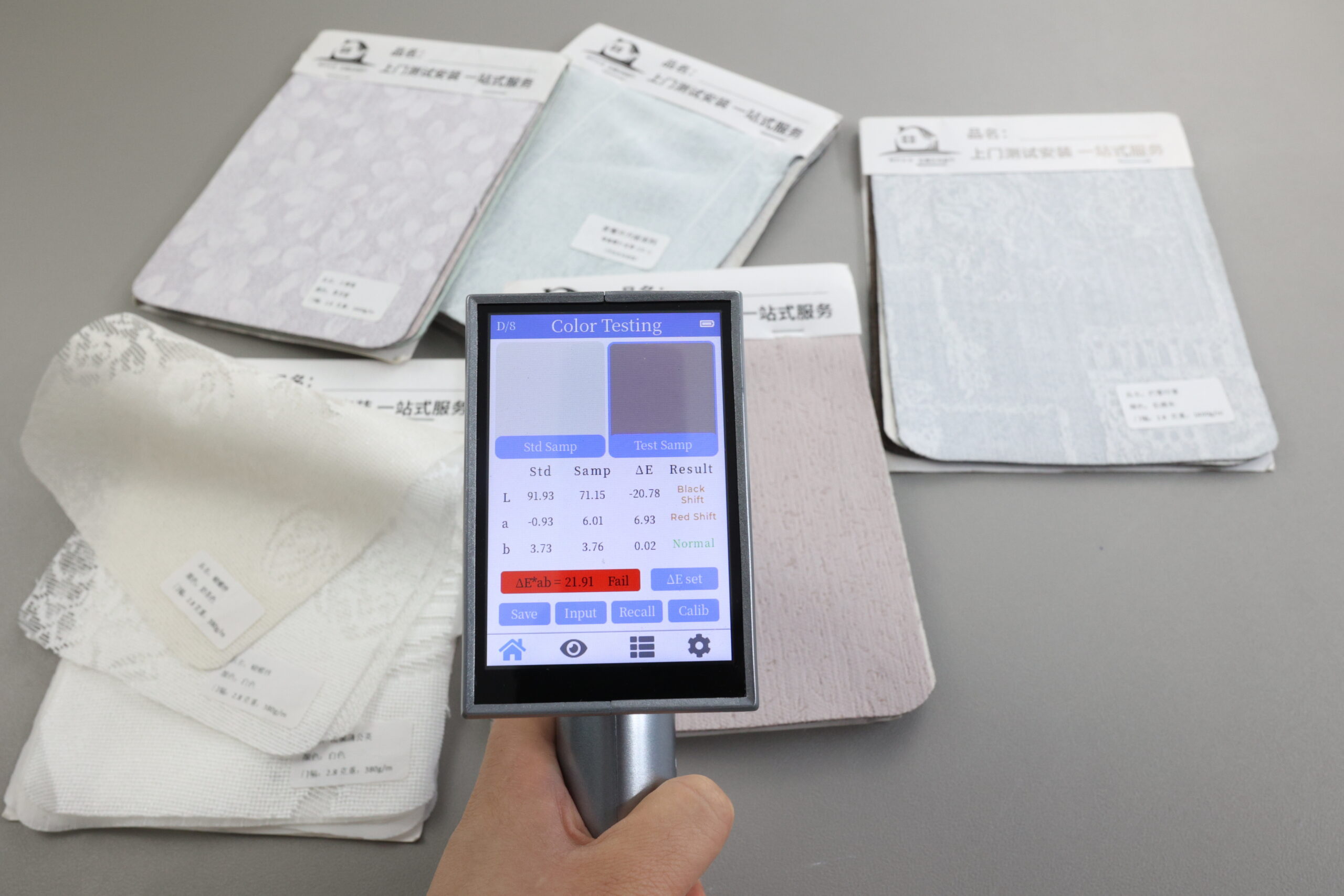
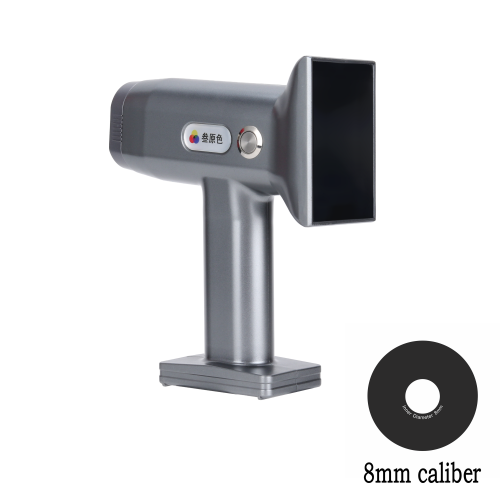
The Sanyuanse color difference meter is an instrument designed for color difference comparison, not a colorimeter (spectrophotometer).
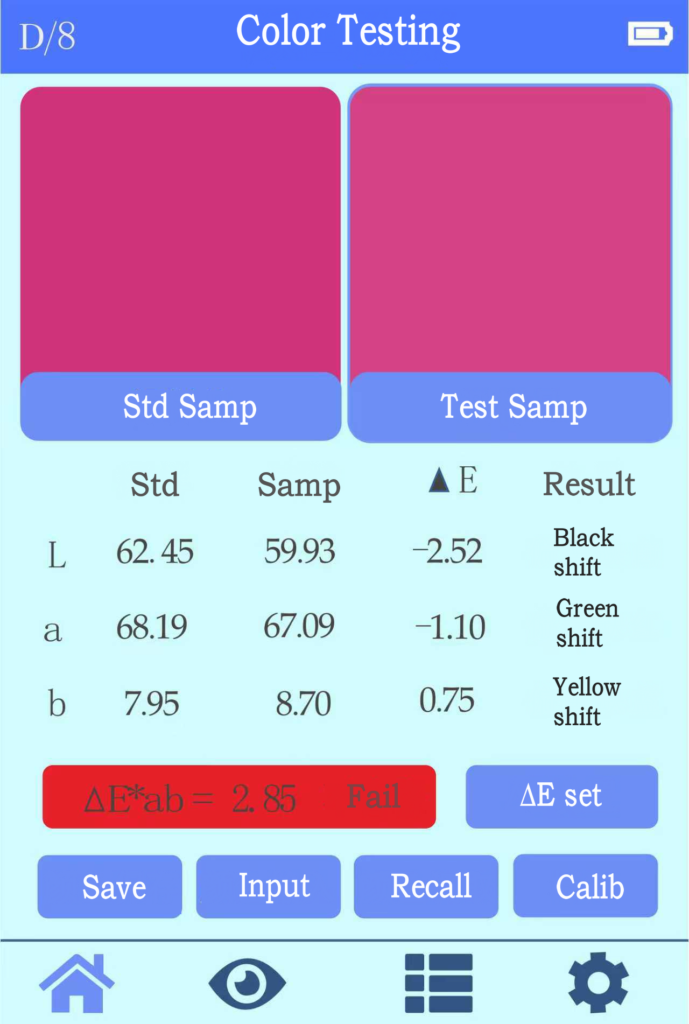
• Measures Relative Differences: It first measures a “Standard Sample” and then measures a “Test Sample,” outputting the color difference between the sample and the standard (ΔL/Δa/Δb/ΔE) to indicate both the direction and magnitude of the discrepancy.
• Does Not Measure Absolute Values: It cannot directly provide the absolute Lab values of a color (only spectrophotometers are capable of measuring absolute values).
• Core Applications: Color matching, color difference control, and batch consistency inspection (e.g., in paint, plastics, printing, and textiles).
II. Lab Values and Color Bias (The Core of Color Matching)
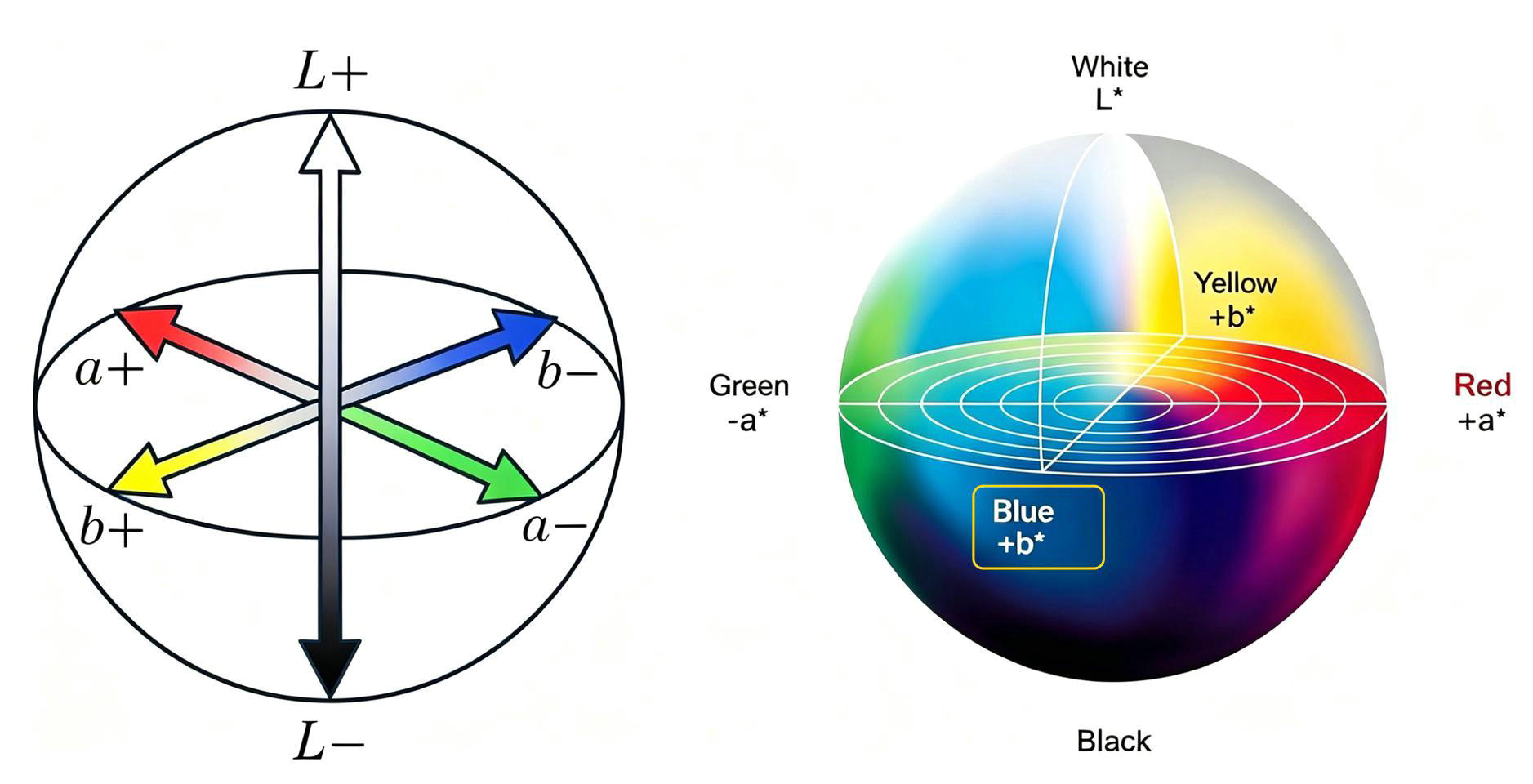
Colorimeters utilize ΔL, Δa, and Δb to describe three-dimensional color deviations, thereby providing direct guidance for color matching:
• L (Black/White / Lightness): 0 = Black, 100 = White
◦ ΔL+: The sample appears too white or too bright (requires darkening).
◦ ΔL−: The sample appears too black or too dark (requires lightening).
• a (Red/Green Axis)
◦ Δa+: The sample leans toward red / lacks green (requires reducing red / adding green).
◦ Δa−: The sample leans toward green / lacks red (requires reducing green / adding red).
• b (Blue/Yellow Axis)
◦ Δb+: The sample leans toward yellow / lacks blue (requires reducing yellow / adding blue).
◦ Δb−: The sample leans toward blue / lacks yellow (requires reducing blue / adding yellow).
• Total Color Difference ΔE: √(ΔL² + Δa² + Δb²). The smaller the value, the closer the match is to the standard (generally, ΔE < 1 is considered acceptable).
III. The Key Distinction from Colorimeters (Spectrophotometers)
• Sanyuanse Color Difference Meter: Outputs relative values (ΔL/Δa/Δb/ΔE); does not provide absolute values; features a simple structure, rapid measurement, and affordability; suitable for color matching, quality control, and batch comparisons.
• Spectrophotometer: Outputs absolute values (Lab/XYZ/RGB, etc.) in addition to color difference data; capable of creating standard color libraries and generating spectral curves; offers high precision but comes at a higher cost;
suitable for R&D, color formulation, standard setting, and high-end quality control.
In short: A color difference meter tells you “how much difference exists and in which direction it deviates,” whereas a spectrophotometer tells you “what color it actually is.”
IV. Simultaneous Display of Multiple Color Spaces (Catering to Diverse Applications)
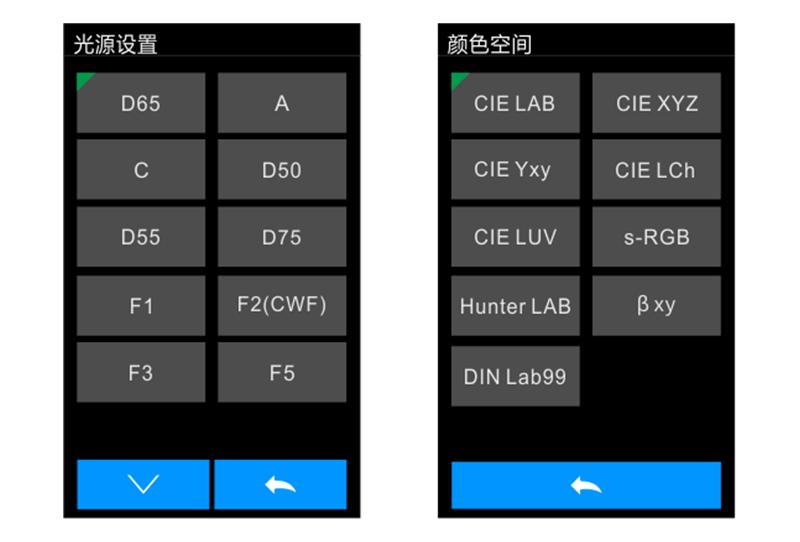
In addition to Lab, the instrument can be switched to display:
• RGB: Screen/digital color values (0–255)
• XYZ: CIE fundamental tristimulus values (raw optical data)
• LCh: Lightness + Chroma + Hue Angle (facilitates more intuitive color matching)
• Yxy: Luminance + Chromaticity Coordinates (commonly used in printing and lighting industries)
• LUV: Uniform Color Space (used in the lighting and display industries)
V. Practical Color Matching Example
Standard Sample: L=80, a=+5, b=+10
Measured Sample Values: L=82, a=+3, b=+13
• Color Difference: ΔL=+2 (lighter), Δa=−2 (greener), Δb=+3 (yellower), ΔE ≈ 3.6
• Color Adjustment Direction: Darken (decrease L), Add Red (increase a), Reduce Yellow (decrease b).