

CONTACT US
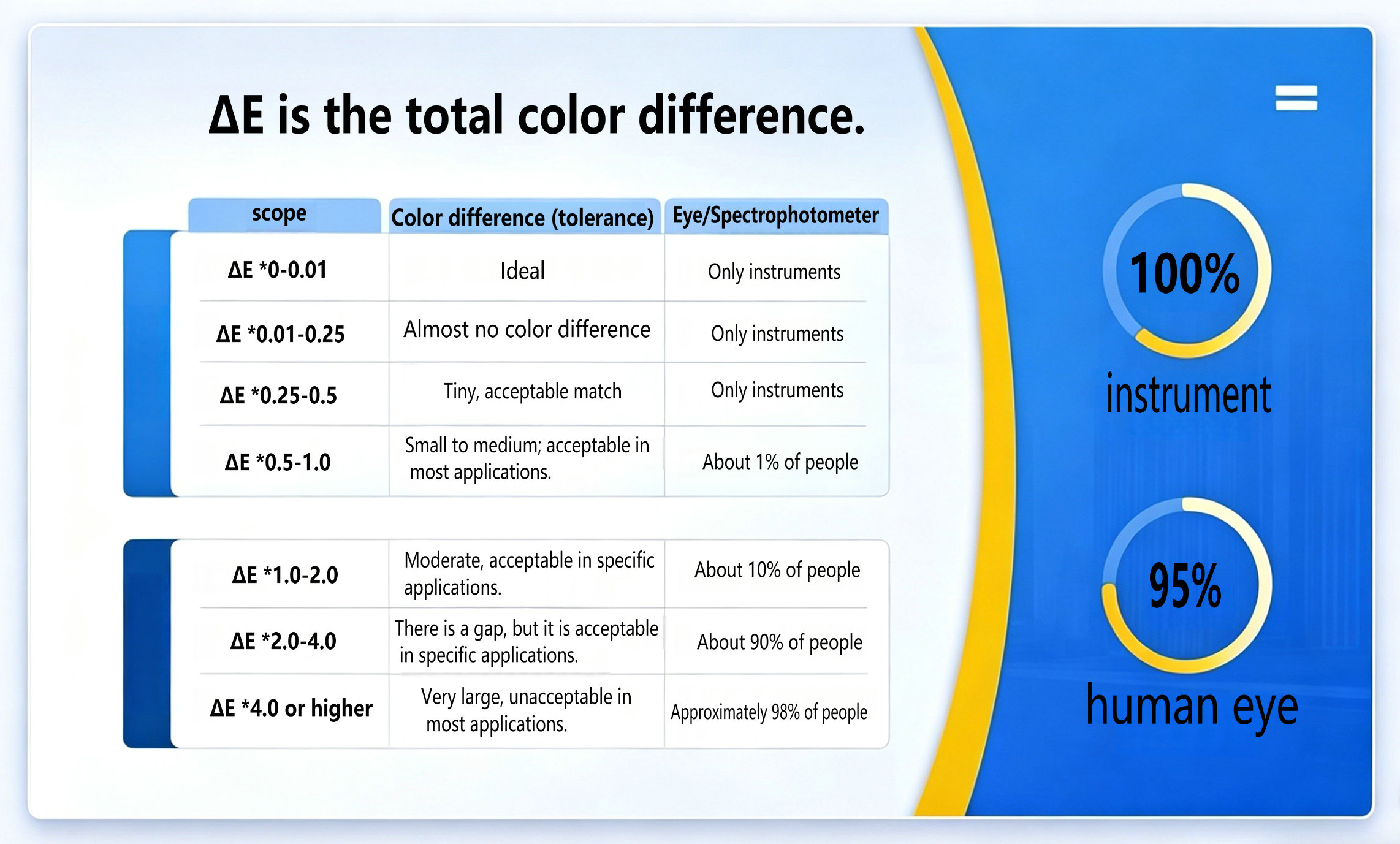
ΔE Color Difference Value Explanation | Color Difference Grade Correspondence
Table with Human Eye and Instrument Resolution
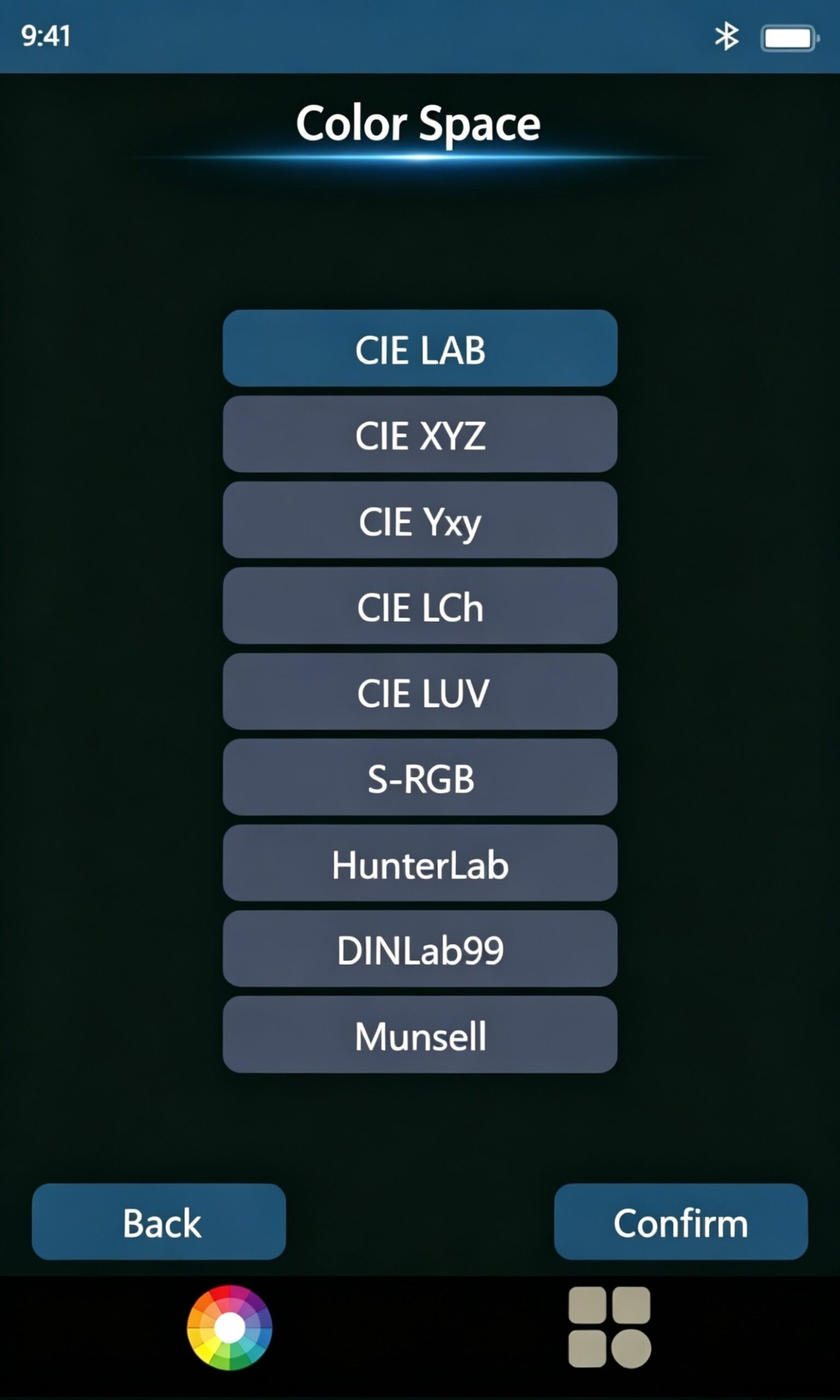
Color Space Parameter Descriptions
1. CIE LAB: The most widely used standard in global industry; employs a three-dimensional system (Lightness/Darkness, Red/Green, and Yellow/Blue) for color difference evaluation.
2. CIE XYZ: Serves as the fundamental, raw data foundation for all color calculations.
3. CIE Yxy: Isolates brightness to focus exclusively on the analysis of pure color and color temperature coordinates.
4. CIE LCh: Comprises Lightness, Chroma (Saturation), and Hue, offering an intuitive visual representation of color vividness.
5. CIE LUV: Specifically optimized for color measurement of self-luminous objects, such as screens, LEDs, and lighting fixtures.
6. sRGB: The universal color display standard for mobile phones and computer screens.
7. HunterLab: A traditional, long-standing standard, primarily utilized for measuring the whiteness and yellowness of materials such as paper and plastics.
8. DINLab99: An optimized version developed for German industry, widely adopted within the European automotive and coatings sectors.
9. Munsell: A classic system for color classification, utilized for color matching, archiving, and color education.
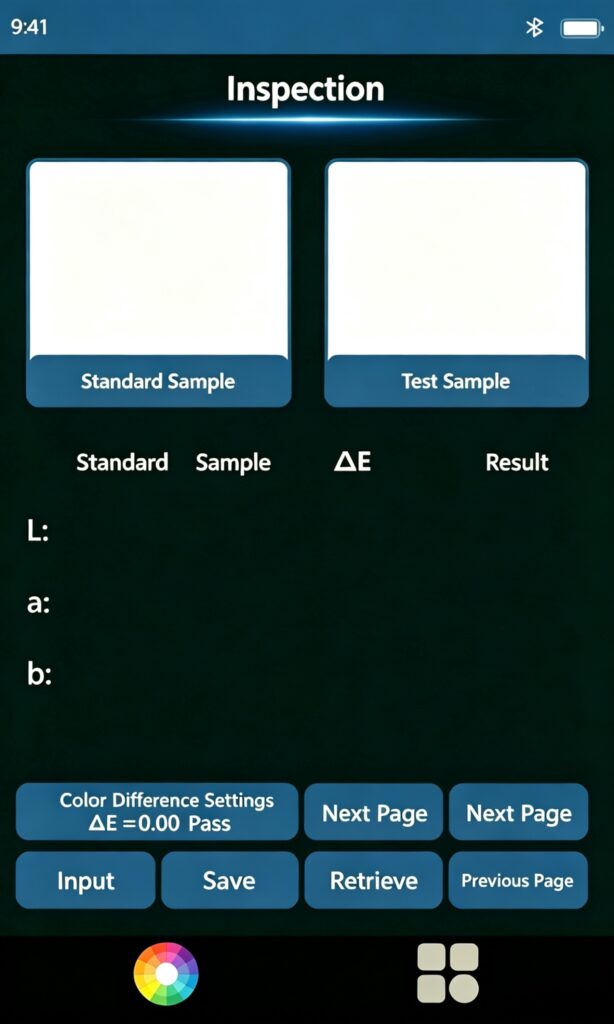
Detailed Explanation of Color Difference Measurement Results
1. L: Lightness (Brightness/Darkness)
Higher values indicate greater brightness and whiteness; lower values indicate greater darkness and blackness.
2. a: Red-Green Channel
Positive values = Shift toward red; negative values = Shift toward green.
3. b: Yellow-Blue Channel
Positive values = Shift toward yellow; negative values = Shift toward blue.
4. ΔE (Delta E): Total Color Difference Value
Represents the magnitude of the overall difference between two colors; the lower the value, the more similar the two colors appear to the naked eye. ΔE = 0 signifies that the two colors are absolutely identical.
5. Standard Sample / Test Sample
Standard Sample = The reference color you have established as the acceptance criterion.
Test Sample = The color of the product currently being tested