
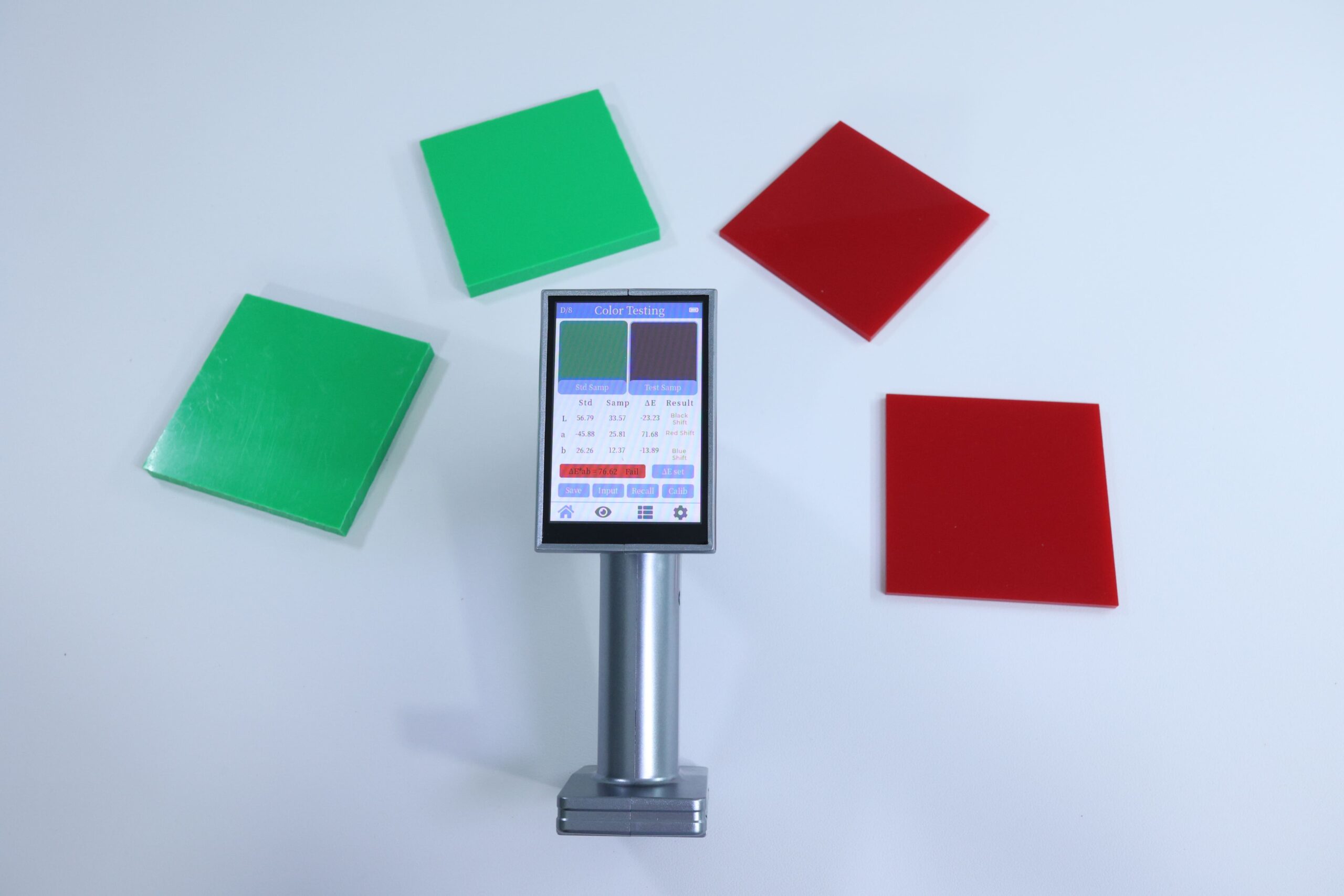
Test aperture refers to the diameter of the light‑emitting window on spectrocolorimeterprobes. 8mm and 4mm are the two most common sizes for industrial portable spectrophotometers. According to ISO 17321‑1 standard, aperture selection depends on sample size, surface texture and uniformity. The 8mm large aperture collects light from a wider test area. It averages color data to reduce errors caused by uneven surfaces. It is the standard choice for most mass‑produced industrial products. Plastic sheets, large paint panels, textile rolls and ceramic tiles all use 8mm aperture. The 4mm small aperture is designed for tiny or irregular samples. It fits small parts, cosmetic powder, hardware accessories and narrow leather strips. Small samples cannot provide enough test area for 8mm aperture. The test result will be unstable and inaccurate. Many factories make mistakes in aperture selection and get wrong batch‑comparison data. The Sanyuanse handheld spectrophotometer supports dual‑aperture switch between 8mm and 4mm. The gun‑shaped probe can be replaced quickly according to sample conditions. For uneven‑texture materials like leather and non‑woven fabric, 8mm aperture improves data repeatability. For lipstick, nail polish and small electronic buttons, 4mm aperture becomes the only reliable choice. When testing mixed‑color samples, large aperture can cover more color areas for average calculation. Small aperture tests single‑color zones separately for precise local analysis. During long‑term batch inspection, factories need to fix one aperture size for unified comparison. Changing apertures randomly will cause color‑data deviation. Sanyuanse equipment marks aperture information on each test report. It ensures data traceability for global buyers. For high‑precision formula matching, 4mm aperture works better for small standard color chips. 8mm aperture is used for large‑area finished‑product inspection. Mastering aperture‑selection rules helps users avoid unnecessary test errors. The portable dual‑aperture spectrophotometer meets diverse testing needs for global industrial manufacturers.